Translate

Monday, May 17, 2010


The child seen above is alive through the generosity of Mrs. Karl Storz and the Storz Corporate family. Karl Storz Company’s large donation of pediatric endoscopic instruments had just arrived when this three year old presented with a coin lodged in his esophagus. The child refused to swallow even breast milk and had a cough and fever with an aspiration pneumonia. With the newly arrived finely crafted telescopes and optical hard foreign body removal forceps, the coin was successfully removed from an esophagus that was edematous and inflamed.
The generosity of many companies such as Karl Storz, Carl Zeiss Meditec, Anspach, Surgitel, Smiths Medical, Covidien, Boston Medical Products, Dale, Westone Labs, Widex, Jedmed, Starkey, ArthroCare, Stryker, Grace Medical and KayPentax is heart-warming. When I am tired and discouraged, a request for needed medical supplies to save lives is granted and makes one realize how much good there is in the world. Businesses and corporations sometime receive bad press, but their contribution to this family is immeasurable. They have a living child and are eternally grateful.
Like many of our patients, this rural indigent family did not have Ghana National Health Insurance and were unable to pay for medical care. I am sure the Storz family is even more delighted that their instruments were used to save a child whose people are among the forgotten in the world.

Thursday, May 6, 2010

An eventful week.

Doing well after surgery.

One week later he is doing well after surgery.

The child as he presented in the operating room.

Sitting lower than the chief who actively works for peace in the region.

Lower resistance allowed a tooth infection to spread to the neck obstructing her breathing.

A congenital lymphatic malformation became infected resulting in septicemia. Prior to drainage.

***

“What exciting thing is going to happen today?” This statement was certainly proven true during the past week.
A young man, riding his five-year old brother to school on a motorcycle, ducked to avoid a long steel pipe protruding from the back of another vehicle as he tried to pass it. The pipe, however, struck the little boy sitting behind him, penetrating the forehead, and pushing the skull into his brain. Now, several days after removing the displaced skull fragments, the child is doing well. Another man presented in septic shock from an infected neck cyst. A liter of exudates was drained and he responded well to antibiotics. Surgery to remove this lymphatic malformation will be performed after the inflammation subsides. A woman came in with difficulty breathing from a swollen, infected neck (Ludwig’s angina), caused by an infected tooth. She has purple skin discolorations, Kaposi sarcoma, and has adult immune deficiency syndrome, AIDS. Her husband died two years ago and her prognosis is poor. Her mother sits besides her bed and she will leave a nine year old son.
Our 110 volt electrocautery machine, kindly donated through Project Cure and transported by the Rotarians, exploded and burned when it was incorrectly plugged into a 220 volt outlet by a member of the nursing staff. The loss of this machine is heartbreaking as it takes months to replace and the cost will be high. Hopefully, the one available backup will continue to function.
Karl Storz’s large donation of endoscopic equipment arrived today. These telescopic endoscopes and forceps will enable us to remove the foreign bodies which many one to five-year olds swallow and aspirate into their lungs.
Many corporations have been extremely generous in supplying the finely crafted tools which have saved the lives of the patients described above. I, and the poor people of Northern Ghana, sincerely thank each and every one of the persons responsible for such an important contribution. I met with the Tamale chief and his elders who work to keep peace in the region.

Tuesday, March 30, 2010

Pursuing the Impossible Dream


X-ray of infant who aspirated an earring into her right lung which was successfully removed with modern bronchoscopic telescopic equipment.

After two and one half years has a modern ear, nose and throat department been established at Tamale Teaching Hospital? No. Some days we have moved backwards. The light at the end of the tunnel is seen, but the end is never reached. All things considered, however, our clinic now has equipment which is not available anywhere else in the country.
A modern, “state of the art” ear, nose and throat clinic cannot be established in a developing environment in one’s lifetime. It would necessitate all surrounding structures to be modern and functioning well. This does not exist. Examples of how outside conditions, over which we have no control, interfere with the goal of a modern ear, nose and throat department are an unreliable supply of water and electricity. The lack of water prevents sterilization of surgical instruments and the washing of surgical scrub suits resulting in surgery being cancelled. Electricity fails daily and the returning power surges destroy electrical equipment.
Why continue the uphill, difficult, strenuous struggle for a state of the art department? Because such a department, with modern equipment and technique, saves and improves lives. The modern pediatric bronchoscopes, telescopic optical forceps and magnified image on a monitor enable the removal of aspirated foreign bodies from the lungs of small infants saving their lives.
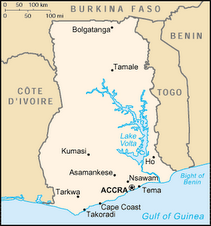
Sometimes I think I benefit the most from these efforts. There is peace and satisfaction in doing something worthwhile and good. The others who benefit are the poor in the northern region of Ghana. If the equipment were not here and we did not care for these patients, they would not have the money or means to travel four hundred miles to the capital of Accra to seek treatment.

Sunday, January 31, 2010

Toothaches and malnutrition in the developing world

I was saddened by the death of a twenty-two year old young man from septic shock which resulted from a toothache. The young man started with a toothache one month ago and sought local village treatment. One week later he developed swelling of the jaw, face and neck, confusion and became irrational. His family continued with the local treatment. Cultural belief has it that swellings are not to be drained or injected. Eventually, he was brought to the hospital and I was called to possibly do a tracheotomy. However, this previously healthy young man was already in septic shock with the whole side of his face and neck filled with exudates; he was feverish, anureic, hypotensive and tachypneic. The abscesses were drained of thick brown pus, but the boy stopped breathing later that evening never responding to fluids and antibiotics. Many families do not bring their sick to the hospital because of cost. The hospital visit fee is $4 while they earn $2 daily. Cost for admission and surgery is between $200 and $300 which is well beyond their financial means. Many patients are brought in moribund and many die on the way. Of those admitted, fifty percent die within the first twenty-four hours, not giving us enough time to treat them.
Hopefully, a better outcome will occur with a 16 month old boy who was recently referred from a hundred miles away because of runny nose and upper respiratory infections of four months duration. The child was examined for nasal foreign bodies, syphilis and aids, all being negative. Because of his poor condition, he was referred to our excellent pediatrician, who questioned why a child with a runny nose was being referred from an ear, nose and throat doctor. After I explained the results of my work-up, he said he would get back to me and returned later stating the child had malnutrition, being less than one percent of normal weight, with multiple lymph nodes probably due to tuberculosis. He admitted the child to the hospital to be fed and treated. Although TB, pneumonia and diarrhea are listed as the cause of childhood deaths, the real cause sixty percent of the time is underlying malnutrition which makes the children more susceptible and results in fatal outcomes because their resistance is so low.
It is a joy to work with the young, intelligent, dedicated Ghanaian physicians and to see the improvement in the care of the patients.

Sunday, January 24, 2010

Tamale Teaching Hospital is a good hospital

Tamale Teaching Hospital is a good hospital. Newly appointed and recently trained physicians, pharmacists, laboratory technicians and administrative professionals have improved patient care. The new graduates are dedicated, knowledgeable and hard working. They are capable of working in the most sophisticated medical settings with the proper orientation and training. Their lectures at the hospital clinical meeting are excellent. Medications and bandages are available through the persistent efforts of the new caring, hard working and honest administrators. However, the staff is limited by the lack of equipment. In the hospital there is one electrocardiographic machine, three ward oximeters, no vaporizers or intravenous infusions pumps. Our otolaryngology clinic is lacking a pediatric nasopharyngoscope and bronchoscopes, laser, rigid telescopes for sinus surgery and suction debriders for nasal polypectomies. “One looks for what is needed and then one uses what is found” and “We are managing” are the appropriate practical Ghanaian sayings in response to this lack of equipment. Six Columbia St.Lukes/Roosevelt ultrasound physicians and public health professionals, under a General Electric grant, gave an excellent two day ultrasound workshop. Ultrasoundography is inexpensive, non-invasive and without complications. Two ultrasound machines were donated, which are appreciated, but thirty are needed along with maintenance for the five millions patients in northern Ghana. All is not Utopia. Human nature is universal and there are those who do not work when necessary, saying they are underpaid. But, we are managing.