Translate

Saturday, March 31, 2012

Working In A Different Culture Is A Learning Experience.

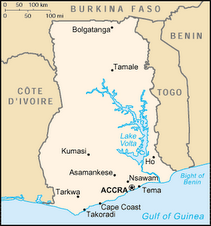
This week thirty new physicians graduated from the medical school here in Tamale, an equal number of men and women. They now have a license to learn. For the past few weeks, my lecturing, writing exam questions, and testing of the students’ clinical skills - all while caring for patients at the hospital - has kept me very busy. Their answers showed me where to put more emphasis next year. It is satisfying and I am proud of my part, but I am glad it is over.

Two children recently presented having had coins in their esophagus for four months. The children originally went to their local hospitals where they were told the coins would spontaneously pass. After four months of losing weight, coughing and chest pain, x-rays were taken which showed the continued presence of the coins and they were referred to Tamale. We successfully removed the coins from grossly inflamed esophaguses.

Working in a different culture is difficult. “Instant justice” is practiced here. Two of my patients were caught stealing goats and were immediately beaten and unsuccessfully hung. I cannot reduce one’s fractured mandible because he has a collapsed lung and the other is just regaining consciousness. Because of this tradition of “instant justice,” it is strongly recommended that if a person happens to injure a pedestrian while driving, one should not stop even to offer assistance, but rather continue on to report it at the nearest police station.

Tuesday, March 6, 2012

Why do parents allow children to place small objects in their mouths?

Many extremely sick children arrive late in their disease due to the scarcity of health care, distance and expense of hospital treatment and a culture where they are treated by the local traditional healer. The following three cases presented this past week.  A fourteen-month old came in with a history of coughing after she fell four days before. With persistent questioning, we learned the child had been eating peanuts two days before the fall and the cough was caused by a peanut which was aspirated into her lungs. Removal was partially successful and a second attempt will be made in two days. Another child had had a coin in his throat for four months. He originally went to a hospital closer to his home where the family was told the coin would pass. When the child ate poorly the family brought the child back where he was treated for ‘tonsillitis’ and sent home without an x-ray. After four months, the poorly eating child was taken again to the hospital and the family demanded an x-ray which showed the coin. The patient was finally brought to Tamale Teaching Hospital and as we removed the coin, it was thickly coated and the esophagus wall was hemorrhagic and friable. There was a danger of esophageal perforation, but the child did well. The third pediatric case, a little boy, septic and drooling, had had a fish bone in his throat for four days and developed an abscess. He is doing better.
Tragically, too many parents allow their children to place small objects into their mouths. In addition to picking things up from the ground or floor, I often see a mother buying a small bag of popcorn in order to keep her child occupied and free from crying. Better education concerning this danger is sorely needed and can perhaps be accomplished through articles in the newspapers or on the radio. In the United States, 2,000 children, between the ages of one and three, used to die annually from the aspiration of peanuts, popcorn or corn. With proper legislation and education now only 25 die annually. In Ghana, I fear the number is much higher.

The poor patients of northern Ghana thank you for your generosity

The container with all its life-saving medical equipment has arrived fully intact at Tamale Teaching Hospital. I wish to thank each of you for your generosity, help and support in making this possible. The supplies and equipment are quickly being put to good use with our many sick patients.
The poor people of northern Ghana would surely welcome you into their homes, give you water, mangoes and their love if they knew how to reach you. I pass their deep appreciation on to you.
Sincerely,
Jim Murphy, MD

PS With the newly donated scrub suits, surgery will no longer have to be cancelled due to lack of clean ones (we only had seven pairs), the headlights will enable us to effectively diagnose our clinic patients and perform better surgery (we were working in the clinic with only one broken mirror Storz-Lempert headlight), the drill bits and microscope drapes will allow us to again perform ear surgery, the two anesthetic machines will add to our three machines, only one of which is fully functional, and with the new supply of tracheostomy tubes we can stop using ones that have expired. Tears came to my eyes when the container doors were opened and I saw the needed equipment that took a great deal of work on the part of so many generous,
donating people .

Wednesday, December 21, 2011

Making Progress


Last week, with my wife, Cyndy, in attendance I had the honor of being inducted into the Ghana College of Physicians and Surgeons. The following night she flew home for Christmas with the children and I went to pilot an ultra light plane, but was grounded due to visibility. While waiting for better visibility, I toured the Akosombo Dam, which supplies seventy-five percent of Ghana’s electricity. Before the weather improved, I had to return to Tamale. It was a nice break.
When going to Church, I was picked up by a small taxi which already had eight occupants. I hesitated to get in, but joined the crowd. When requesting a stop, the driver questioned if I was not going to the hospital. This explains why he picked me up with a full cab. He was doing his part to help me get to the hospital.
The following photos are of an infant who swallowed a hair clip, an elderly man with a left facial paralysis and meningitis from a chronic ear infection, a party for three doctors who are leaving to continue their training and the ultra light plane which I never got to fly.


Monday, October 24, 2011

"We Are Managing" A Favorite Ghanaian Saying

 Scholar Athletes at the Savelugu School for the Deaf

With the help of Doctors Tuopar and Cammilari, maxillofacial surgeons from the United Kingdom, we reconstructed a young woman’s nose, which was damaged by an electrical burn. Some readers may find certain photos upsetting, so I will post one of her after she has healed. Her reconstructed nose is looking good and today she smiled for the first time. The defect caused her psychological trauma; perhaps her husband left her for he has not been seen.

The four-year old who ruptured his eye when he was run over by a motorcycle has done well and he now has vision in that eye.

Poverty makes work difficult. Tamale Teaching Hospital cannot afford to purchase alcohol for disinfection, to replace the broken bulb for our only operating room light, or to pay my nurses to travel to the schools for the deaf to take ear impressions in preparation to be fitted with donated hearing aids. Very poor patients who cannot afford the cost of the national health insurance do not receive any financial aid. When we request assistance for such a patient’s care, the social service department simply writes to benefactors asking them to help. I have seen this process to be successful only once.